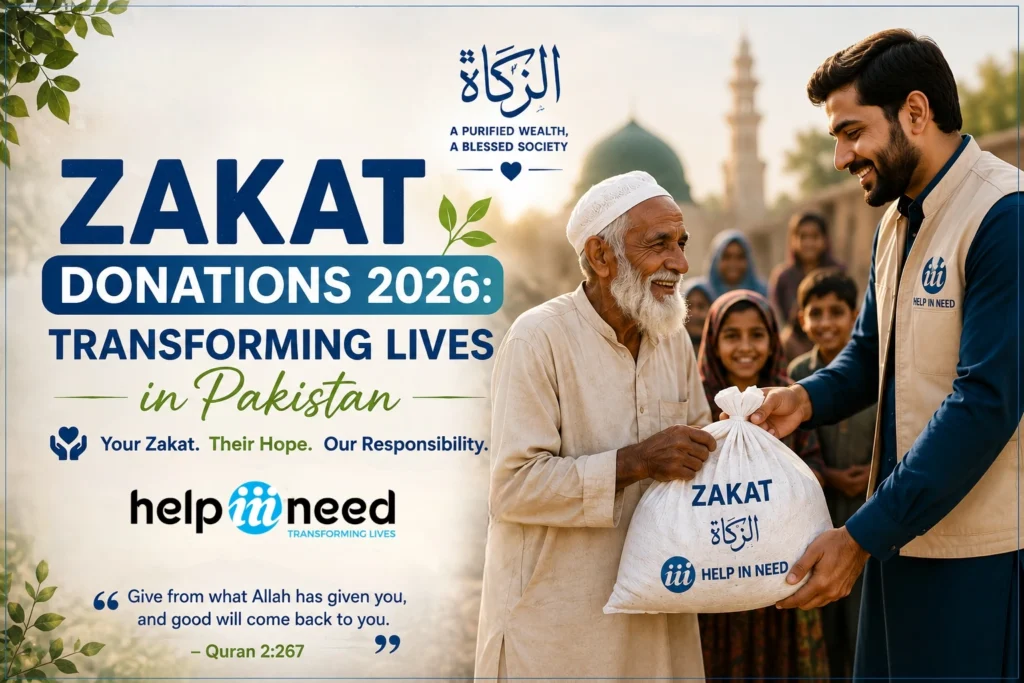
Navigating economic challenges and inflation makes fulfilling sacred obligations like Zakat more critical than ever for vulnerable communities. For millions of underserved families across Pakistan, basic necessities such as nutritious food, clean drinking water, and fundamental medical care remain daily struggles. When charitable giving is unplanned or sporadic, relief often stays limited to short-term aid without addressing the underlying roots of generational poverty. Moreover, failing to direct obligatory contributions toward structured, long-term programs leaves struggling households trapped in cycles of financial dependency. Understanding how to direct your zakat donations 2026 ensures that your obligation becomes a life-changing catalyst for lasting social change.
Furthermore, by taking a strategic approach to your faith-based giving, you can ensure that every rupee delivers maximum field impact and long-term empowerment. Modern humanitarian programs blend immediate emergency aid with sustainable assets like vocational trade kits, clean water infrastructure, and educational sponsorships.
Understanding the Rules and Thresholds for Zakat Donations 2026
Fulfilling your obligation begins with a clear understanding of the Nisab threshold—the minimum amount of net wealth a Muslim must possess before Zakat becomes due. In Pakistan, official updates establish the Nisab value based on the current market value of silver (612.36 grams) or gold (87.48 grams). For the 1446–1447 A.H. Islamic year, the official minimum Nisab threshold was set at PKR 503,529.
Calculating your obligation accurately requires reviewing all qualifying assets held continuously over one full lunar year (Hawl). These include cash savings, gold and silver, investments, business inventory, and net receivables after deducting immediate personal liabilities. Deducting non-eligible assets ensures that your final contribution strictly adheres to established Islamic principles while providing maximum benefit to eligible recipients.
Calculating Your Eligible Assets
Begin by listing all liquid assets, including bank balances, mutual funds, gold holdings, and trade inventory accumulated over the lunar year. Subtract short-term debts and immediate living expenses to arrive at your net zakatable wealth.
Nisab Rates and Threshold Benchmark
Compare your total net zakatable asset value against the prevailing Nisab threshold (PKR 503,529). If your wealth meets or exceeds this benchmark, two and a half percent (2.5%) of the total value is due for distribution.
The Importance of Proper Timing
While many believers prefer distributing obligations during the holy month of Ramadan, Zakat can be calculated and paid as soon as your wealth completes one full lunar year (Hawl). Timely payments ensure that relief funds reach emergency initiatives without delay.
Key Categories of Zakat Eligibility and High-Impact Allocation
Islamic principles outline eight specific categories (Asnaf) eligible to receive obligatory assistance, ensuring that wealth directly benefits those in genuine hardship. Strategic allocation prioritizes the most vulnerable, including impoverished households, widows, orphans, and individuals struggling with unmanageable debt.
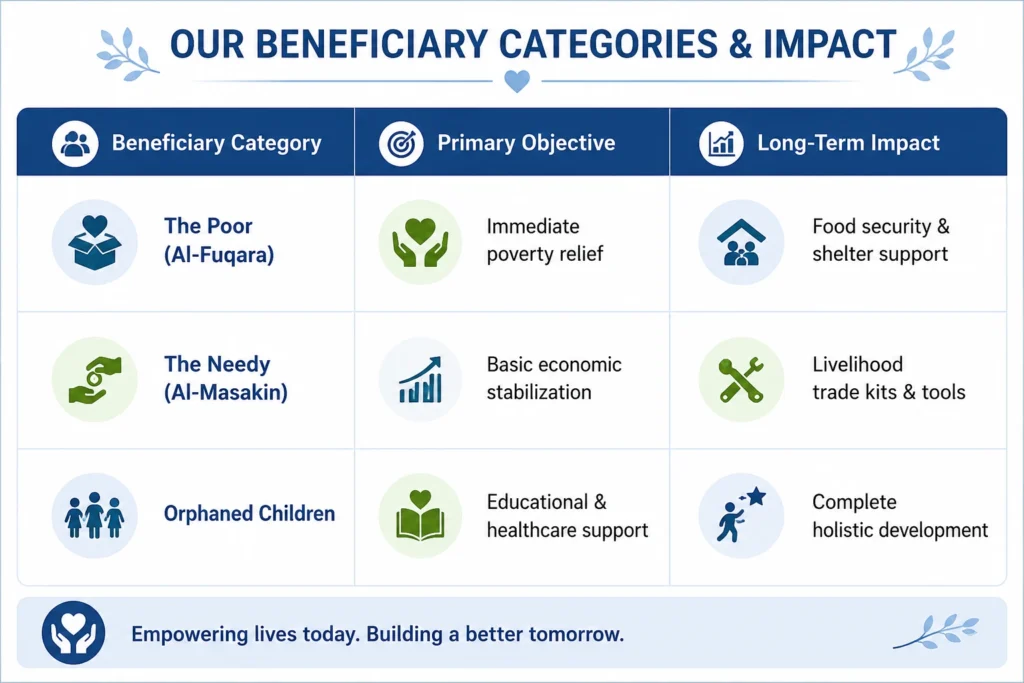
Directing contributions toward structured development programs ensures that funds do not simply provide temporary relief, but build sustainable economic self-sufficiency. Supporting sustainable assets aligns with the higher objective of turning aid recipients into future givers.
Direct Support for Widows and Households: Allocating funds directly to female-headed households ensures immediate access to food, safe housing, and basic utilities. Essential aid shields vulnerable mothers from economic exploitation while stabilizing the family unit.
Comprehensive Care for Orphans: Zakat-funded orphan support programs cover school tuition, uniforms, learning materials, and healthcare checkups. Providing quality education breaks generational poverty cycles and secures brighter futures.
Assistance for Debt-Stricken Families: Helping low-income workers clear burdensome debts restores their financial stability and ability to earn a living. Removing financial strain allows families to focus their earnings on long-term self-reliance.
Transforming Lives Across Underserved Districts in Pakistan
Applying obligatory giving through organized field operations brings tangible transformation to vulnerable communities across Pakistan. Traditional relief models that rely solely on brief handouts fail to address long-term poverty traps. Combining immediate assistance with long-term capacity building honors the true spirit of Islamic giving by fostering community resilience.
When you direct your contribution to Help in need, your funds fuel comprehensive community initiatives. Providing a skilled artisan with a trade kit, installing solar water pumps in off-grid villages, or organizing maternal health camps creates lasting social equity.
Here are major areas where your contributions create direct, measurable change:
- Sustainable Livelihoods: Micro-equity trade kits and livestock grants empower families to earn independent, halal incomes.
- Educational Access: Complete school kit distributions and classroom rehabilitation keep young children, especially girls, in school.
- Clean Water Access: Solar-powered water filtration units provide clean drinking water to remote rural villages.
- Healthcare Services: Mobile medical camps and free eye surgeries prevent treatable conditions from causing permanent disability.
Vocational Training and Micro-Startups
Equipping young adults with marketable technical skills creates immediate pathways to employment. Trade kits enable vocational graduates to start small local businesses and support their dependents.
Clean Water Infrastructure
Installing community hand pumps and solar filtration plants prevents waterborne illnesses across rural districts. Reliable clean water access saves rural women and children hours of walking each day.
Mobile Healthcare Camps
Delivering primary healthcare services directly to remote communities saves lives and prevents minor ailments from escalating into medical emergencies. Mobile units provide maternal checkups, essential medicines, and diagnostic tests at zero cost.
Principles of Ethical Stewardship and Transparency
Ensuring that your contributions reach verified beneficiaries requires partnering with humanitarian organizations that uphold complete transparency. Modern non-profits employ rigorous field verification, independent financial auditing, and direct reporting to guarantee complete donor trust.
Ethical stewardship guarantees that obligatory contributions are processed separately from administrative budgets, keeping field allocation high. Respecting recipient dignity during aid distributions remains a fundamental principle of ethical humanitarian work.
Thorough Beneficiary Verification
Field officers conduct door-to-door socio-economic evaluations to verify financial eligibility before distributing aid. Rigorous verification ensures that contributions reach genuine recipients.
Independent Financial Auditing
Publishing clear impact reports and undergoing regular third-party audits maintains high operational accountability. Transparency reassures donors that every contribution is utilized responsibly.
Upholding Recipient Dignity
Humanitarian assistance must always be delivered with deep respect, care, and privacy. Ethical field operations prioritize empowering recipients rather than creating public spectacles during distribution drives.
Practical Guidelines to Maximize Your Zakat Donations 2026 Impact Today
Maximizing the effectiveness of your faith-based giving requires planning, accurate calculations, and selecting high-impact projects. Moving from sporadic giving to a structured annual plan ensures that your contributions achieve maximum positive change.
By aligning your financial planning with verified humanitarian initiatives, you fulfill your obligation while creating lasting benefits for families in need.
Calculate your exact obligation using a verified online portal to ensure accurate valuation of all liquid assets and investments.
Direct a portion of your contribution toward sustainable trade kits or solar water wells to generate continuous economic impact.
Follow these practical guidelines for effective giving:
- Verify Nisab Thresholds: Double-check official annual Nisab benchmarks before finalizing your calculation.
- Partner with Established NGOs: Select organizations with proven track records of transparent field operations in Pakistan.
- Support 100% Allocation Programs: Look for initiatives that ensure the entirety of your contribution directly benefits field programs.
- Track Your Impact: Review post-campaign reports and project updates to observe how your contribution changes real lives.
Automating Annual Contributions
Scheduling your donations ensures that your obligations are met on time without last-minute stress. Regular giving helps non-profits plan continuous aid campaigns throughout the year.
Combining Relief with Empowerment
Splitting your giving between immediate food security and long-term vocational tools balances urgent aid with sustainable development. This balanced approach protects families today while building security for tomorrow.
Sponsoring Family-Centric Projects
Pooling resources with family members or colleagues allows you to fund entire community projects, such as deep water wells or vocational cohorts. Group giving multiplies individual impact into lasting community infrastructure.
FAQs
What is the Nisab rate for Zakat donations in 2026 in Pakistan?
The official Nisab threshold for the 1446–1447 A.H. Islamic year was set at PKR 503,529 for bank account deductions and asset eligibility.
Can Zakat be used to fund vocational trade kits and micro-businesses?
Yes, providing trade kits or vocational tools to eligible recipients restores their economic independence, fulfilling the higher purpose of Islamic giving.
How does Help in Need ensure 100% transparent distribution?
Help in Need conducts rigorous door-to-door field verification, independent audits, and regular impact reporting to ensure funds directly aid eligible beneficiaries.

На данном ресурсе вы сможете получить нужную информацию.
https://tltrock.ru/material/2026-06-01-tragediya-na-tulskom-dvore-malysh-sbit-bmw-x5.html