When floodwaters swept through South Punjab, they took more than homes. They took livelihoods, routines, and the quiet dignity of being able to provide for your own family. Our Livelihood Support Program exists to give that dignity back, and Ali’s story shows exactly how.
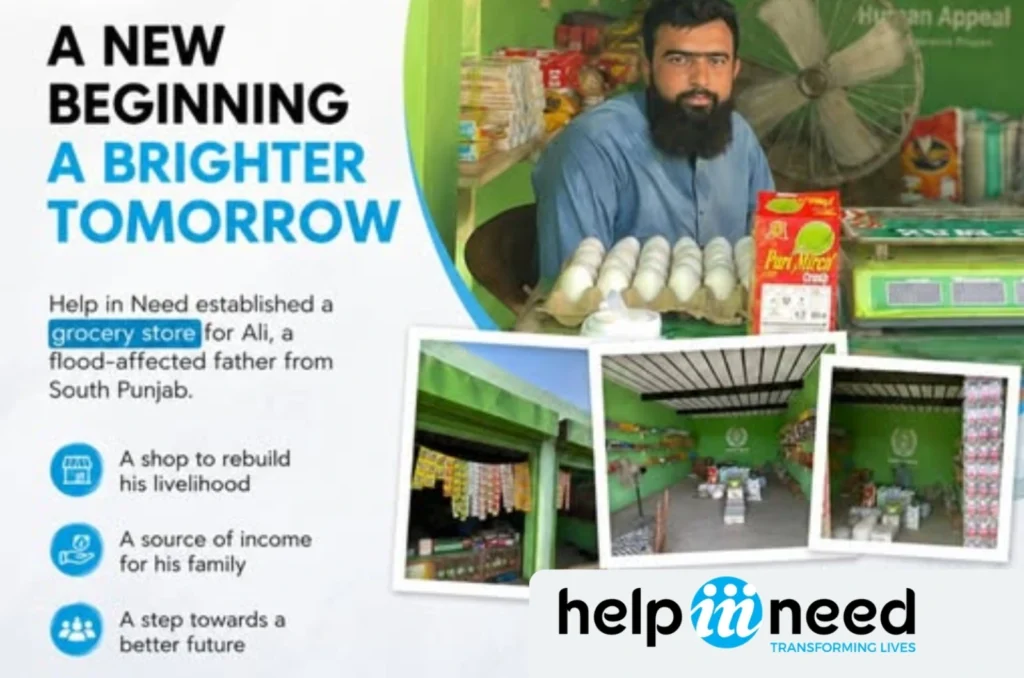
Ali, a father from a flood-affected community in South Punjab, lost everything when the floods hit. His small business was destroyed, his income vanished overnight. Moreover, he was left wondering how he would feed his children the next day. Stories like his repeat across flood-hit Pakistan every year, yet each one still carries its own weight of loss and worry.
This is where sustainable support, not just short-term aid, makes the difference.
What Is the Livelihood Support Program?
The Livelihood Support Program is Help in Need’s response to a simple but urgent question. what happens to families after the emergency aid runs out?
Immediate relief including food, water, shelter, saves lives in the first days after a disaster. But recovery takes longer. Families need a way to earn again, stand on their own feet, and rebuild without depending on aid indefinitely.
Through the Livelihood Support Program, Help in Need provides flood-affected individuals with the tools, equipment, or setup. They need to restart an income-generating activity. For Ali, that meant a fully equipped grocery store stocked, ready, and his to run.
This approach reflects a wider principle found in Islamic teaching on charity: giving a person the means to support themselves carries lasting value. As the well-known saying goes, it is better to teach a person to fish than to hand them a fish. And the Livelihood Support Program is built on exactly that thinking.
How Does the Livelihood Support Program Help Families Rebuild?
Every family supported through this programme faces a different set of challenges, but the goals are consistent.
- Restoring income — families move from dependency on aid to earning a regular income again
- Rebuilding with dignity — beneficiaries run their own business rather than receiving handouts indefinitely
- Long-term stability — a working shop or trade means school fees, food, and medicine can be paid for without crisis
- Community recovery — when one family’s shop reopens, neighbours benefit too, from access to goods to local employment
For Ali, this meant more than a source of income. It meant waking up with a purpose again, and being able to look at his children and know he could provide for them. You can read more about how Help in Need structures its flood recovery work on our flood relief projects page.
Who Benefits From This Kind of Support, and Why Does It Matter?
Flood-affected families in South Punjab are often small business owners, farmers, or labourers who lost their only source of income in a single event. Without support, many are pushed into debt or forced to send children to work instead of school.
The Livelihood Support Program is designed with these realities in mind:
- Assessing which families lost income-generating assets, not just homes
- Identifying practical, sustainable options — a shop, tools, or equipment suited to that person’s skills
- Setting up the business fully, so the beneficiary can start earning immediately
- Following up to ensure the support translates into lasting stability
This is why programmes like this matter more than one-off donations. A grocery store doesn’t just feed one family for a week. it can support that family for years, and often becomes a source of Sadaqah Jariyah for everyone who contributed to it.
How Help in Need Can Help
Help in Need operates on a 100% donation policy, meaning every rupee given towards the Livelihood Support Program goes directly to families like Ali’s, not towards overheads or admin costs. When you support this programme, you are not simply funding relief. You are funding a family’s ability to stand independently again, long after the headlines about the floods have faded.
Whether it’s a grocery store, a tailoring setup, or tools for a trade, your donation helps rebuild what the floods destroyed. Visit our donation page to support the next family waiting for their fresh start.
FAQs
What is the Livelihood Support Program by Help in Need?
It’s a recovery initiative that helps flood-affected families restart income-generating businesses, such as grocery stores or trade setups, so they can rebuild financial stability rather than depend on ongoing aid.
How is livelihood support different from emergency flood relief?
Emergency relief covers immediate needs like food, water, and shelter. The Livelihood Support Program focuses on long-term recovery, giving families a sustainable way to earn income after the crisis has passed.
Who is eligible for support under this programme?
Families in flood-affected areas who lost their primary source of income, particularly small business owners, tradespeople, and labourers, are assessed and prioritised based on need.
How does my donation get used in the Livelihood Support Program?
Because Help in Need follows a 100% donation policy, your contribution goes directly towards setting up businesses like Ali’s grocery store, with no deductions for administrative costs.
Can I sponsor a specific livelihood project, like a shop or trade tools?
Yes. Donors can contribute towards livelihood recovery projects, and Help in Need can share updates on how support has helped rebuild a family’s income and independence.
Give a Family Their Future Back
Ali’s grocery store is more than a business — it’s proof that recovery is possible when support is thoughtful and lasting. Every family affected by the floods deserves that same chance to stand on their own feet again. Help in Need’s Livelihood Support Program turns your donation into someone’s fresh start, with 100% of your contribution reaching those who need it most. Donate today at helpinneed.org and help rebuild a life, not just a moment.