
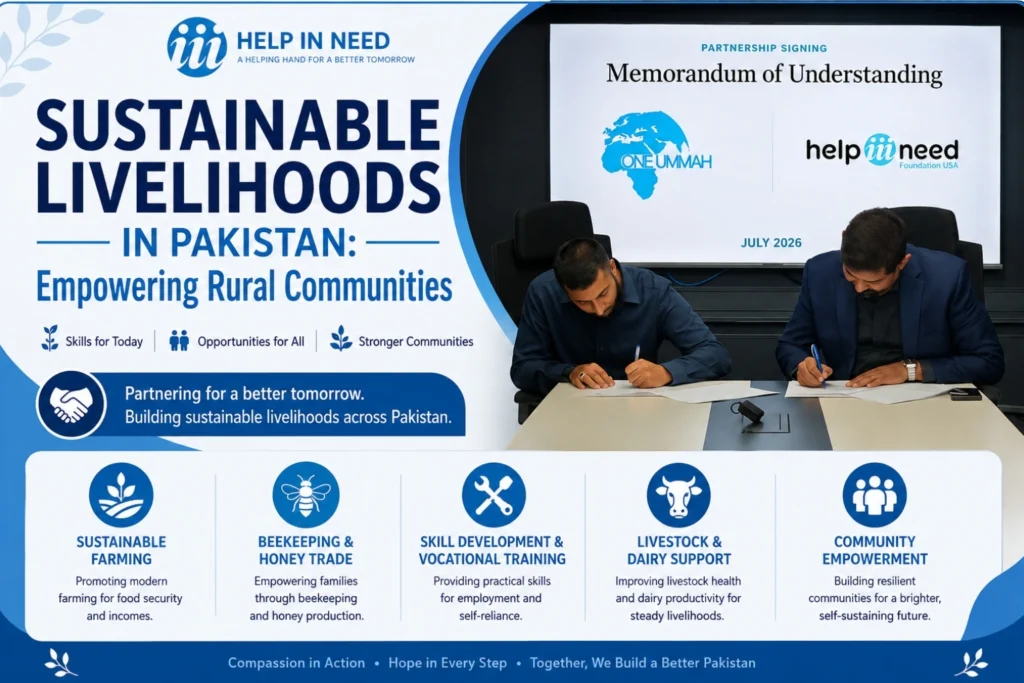
Every single day, millions of families across Pakistan wake up to a harsh economic reality where basic necessities feel completely out of reach. Inflation, unpredictable weather events, and a lack of sustainable livelihoods in pakistan leave talented, hard-working people trapped in endless cycles of financial vulnerability. When immediate survival is the only daily goal, families cannot plan for the future, educate their children, or build emergency savings. Emergency relief packages offer temporary comfort during a crisis, but food packs and cash handouts eventually run out. Without a long-term economic path forward, vulnerable communities remain perpetually dependent on outside assistance just to survive month after month.
To solve this persistent challenge, we at Help in need have, shift our focus toward building sustainable livelihoods in pakistan through hands-on skills, small business tools, and direct asset investment. By providing tailored vocational training and micro-enterprise kits, local organizations empower individuals to generate their own steady income year after year.
The Core Foundations of Sustainable Livelihoods in Pakistan
Building lasting economic stability requires much more than simply handing out money or basic equipment. A truly sustainable approach addresses the root causes of poverty by evaluating local market dynamics, natural resource availability, and community strengths. When individuals receive training that matches actual market demand, they can turn newly acquired skills into profitable, enduring small businesses.
Furthermore, integrating modern tools with traditional practices helps rural communities thrive in changing environments. For example, pairing local agricultural knowledge with modern livestock care or sustainable farming techniques creates resilient income streams. When families diversify their income sources, they become far less vulnerable to sudden market shifts or extreme weather events.
Market-Driven Vocational Skills
Vocational education must directly align with what local consumers and businesses actually need. Training young adults in high-demand trades ensures that their new qualifications translate immediately into paid work or profitable independent services.
Local Resource Optimization
Programs achieve higher success rates when they build upon the natural assets already available in a region. Utilizing local land, raw materials, and regional trade routes keeps overhead costs low and maximizes profit margins for new business owners.
Financial Literacy and Management
Earning an income is only half the battle; knowing how to manage and reinvest those earnings ensures long-term business survival. Teaching basic bookkeeping, budgeting, and reinvestment strategies helps new entrepreneurs maintain healthy financial habits over time.
Key Livelihood Initiatives Transforming Rural Areas
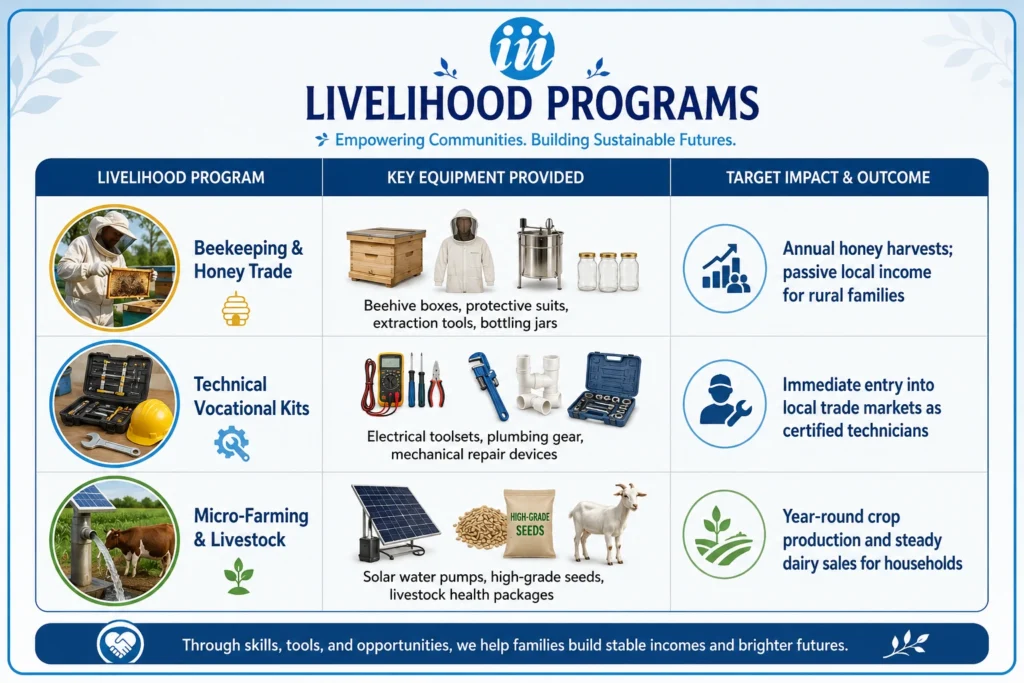
Across rural provinces and remote regions, targeted income-generation projects are changing the economic landscape. From specialized agricultural practices to modern technical services, these focused initiatives provide practical solutions tailored to specific geographic needs.
When communities gain access to these programs, the immediate economic pressure on households drops significantly. Instead of leaving their ancestral homes to find low-wage day labor in crowded urban hubs, young adults can build prosperous futures right in their home villages.
Agricultural and Beekeeping Projects
Rural geography offers ideal conditions for specialized farming ventures like apiculture. Providing complete honeybee kits allows families to launch profitable micro-enterprises that require minimal land while yielding valuable, high-demand products.
Technical and Electrical Trades
As rural infrastructure expands, the demand for skilled mechanics, electricians, and plumbers continues to skyrocket. Equipping youth with practical technical training creates immediate earning opportunities in growing local market centers.
Small-Scale Retail and Micro-Enterprises
For many households, starting a modest village shop or tailoring business offers a reliable daily cash flow. Providing initial inventory and basic shop fittings allows families to launch commercial ventures without taking on dangerous debt.
Empowering Women Through Inclusive Trade Skills
No community can achieve full economic potential when half of its population is excluded from financial opportunities. Establishing culturally respectful, home-based trade options allows women to earn independent incomes while supporting their families.
Female financial empowerment creates an immediate, positive impact on household welfare. Research consistently shows that when women earn an income, they reinvest a significant portion directly into their children’s nutrition, healthcare, and formal education. key benefits of supporting female-led sustainable livelihoods in pakistan:
- Improved Family Nutrition: Increased household income leads directly to better food security and healthier daily diets for growing children.
- Higher School Enrollment: Women with independent earnings prioritize keeping both daughters and sons in school for longer periods.
- Increased Economic Resilience: Dual-income households recover much faster from unexpected financial shocks, illness, or crop failures.
- Enhanced Community Standing: Earning a respectable livelihood earns women greater respect and a stronger voice in local decision-making.
Home-Based Digital and Textile Skills
Tailoring, embroidery, and basic digital tasks offer ideal income opportunities that respect local cultural norms. Women can master these flexible crafts at home, allowing them to balance family care with productive work hours.
Livestock and Poultry Management
Managing small poultry farms or dairy animals fits seamlessly into daily rural routines. Selling eggs, milk, and breeding stock provides female entrepreneurs with a steady, independent stream of household revenue.
Micro-Finance and Peer Savings
Establishing community-based savings groups encourages women to pool resources and support one another’s business ventures. These small peer networks build trust, provide safety nets, and foster collective economic growth.
The Role of Strategic Organizational Partnerships
Creating widespread, long-term impact requires strong collaboration between dedicated non-governmental organizations, local community leaders, and international partners. When institutions combine their resources and expertise, they can scale successful livelihood models to reach thousands of extra families.
By formalizing clear agreements and strategic alliances, charitable organizations streamline relief operations and avoid duplicate efforts. These strategic partnerships ensure that donor funds are used efficiently to deliver maximum hands-on support to those who need it most.
Combining Crisis Relief with Long-Term Growth
Leading humanitarian organizations are shifting from short-term emergency aid to long-term economic development. Connecting crisis response directly to income generation ensures that disaster survivors recover quickly and build back stronger.
Expanding Regional Program Reach
Partnering with established local networks allows organizations to extend their operational footprint into remote valleys and underserved districts. Broad reach ensures that even the most isolated communities gain access to vital trade tools.
Ensuring Transparency and Accountability
Rigorous program monitoring and joint oversight guarantee that every trade kit and training module meets high quality standards. Transparent operational practices build lasting trust with donors, partners, and beneficiary communities alike.
Practical Steps to Support Sustainable Development
Achieving lasting poverty alleviation requires intentional action from donors, volunteers, and community advocates. Whether you are an individual donor or a corporate sponsor, your choices can drive real, measurable progress toward economic independence.
Instead of funding temporary fixes, direct your philanthropic support toward programs that provide trade kits, professional mentorship, and small business assets. Every trade tool provided represents a permanent step toward ending charity dependency for a family in need.
FAQs
What are sustainable livelihoods in Pakistan?
Sustainable livelihoods are long-term economic programs that equip individuals with trade skills, tools, and business assets. They allow families to earn their own independent income without relying on ongoing charitable aid.
How do trade kits help break the cycle of poverty?
Trade kits provide immediate access to essential tools, equipment, and starting materials needed to launch a small business. This enables newly trained individuals to start earning a steady income right away.
Why is vocational training important for rural youth?
Vocational training teaches practical skills matched to local market demands, helping young adults find work or start businesses in their hometowns without having to migrate to crowded cities.