There’s something quietly powerful about watching someone learn a skill that could feed their family for years to come. That’s exactly what unfolded recently in District Bagh, Azad Jammu & Kashmir, when Help In Need (HIN), in partnership with UKIM, organized a two-day training workshop on honey bee farming and the impact is already rippling through local communities.
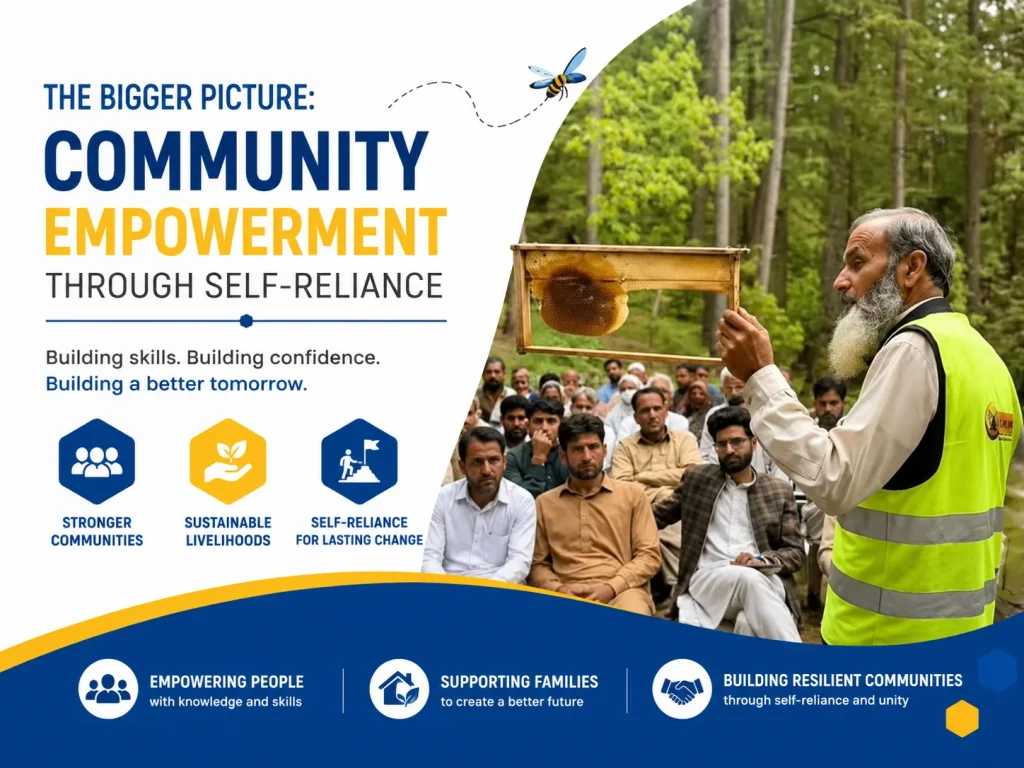
The hills of AJK have always been home to wildflowers, forests, and a landscape that beekeepers elsewhere in the world would envy. Yet for many families in Bagh, that natural wealth had gone largely untapped. This workshop set out to change that, one hive at a time.
What the Workshop Was About
Over two focused days, participants gathered to learn the art and science of modern beekeeping. The training wasn’t just about putting on a protective suit and pulling out frames. Trainers walked participants through the full picture: understanding bee biology and colony behavior, setting up and managing hives properly, seasonal management practices, disease prevention, honey extraction techniques, and critically, how to turn beekeeping into a reliable source of income.
The partnership with UKIM (UK Islamic Mission) brought both resources and expertise to the table, ensuring that the training was grounded in practical, real-world knowledge rather than theory alone. Participants left not just with new skills, but with a clear path forward and an understanding of how beekeeping can serve as a sustainable livelihood in a region where economic opportunities are often limited.
Why Bagh, AJK?
District Bagh sits in the heart of Azad Kashmir, a region known for its lush greenery, varied flora, and cooler mountain climate. These aren’t just scenic qualities; they are precisely the conditions that make beekeeping naturally viable and potentially very profitable.
AJK honey, particularly from mountainous areas, is prized for its purity and rich taste. Families in these communities are surrounded by the raw ingredients for a thriving cottage industry, yet access to training, equipment guidance, and market knowledge has historically been a barrier. HIN’s intervention directly addresses that gap.
Many households in Bagh rely on agriculture and daily labour with very little income security. A well-managed apiary of even just a handful of hives can supplement a family’s income meaningfully and over time scale into a small business. The workshop essentially handed participants a key to a door that had always been in front of them.
Skills That Go Beyond Honey
Modern beekeeping, as taught in the workshop, is about far more than harvesting honey. Participants were introduced to a broader set of competencies that reflect sustainable livelihood thinking.
Hive management and colony health covers understanding when a colony is thriving, when it’s stressed, and how to intervene appropriately. This knowledge prevents losses and builds confidence.
Seasonal awareness matters because bees behave differently across seasons, and AJK’s climate brings its own patterns. Trainers helped participants understand how to prepare colonies for winter, manage the spring buildup, and maximize the honey flow season.
Disease and pest control is one of the biggest factors in beekeeping success. The training covered identification and treatment of common threats, reducing the risk of colony collapse that discourages many new beekeepers.
Value addition and marketing rounds out the picture. Raw honey is one product, but beeswax, propolis, and packaged artisan honey can command much higher prices. Participants were encouraged to think about how to present and sell their products locally and beyond.
This kind of comprehensive, practical training is exactly what separates a one-time initiative from a genuinely transformative one.
The Bigger Picture: Community Empowerment Through Self-Reliance
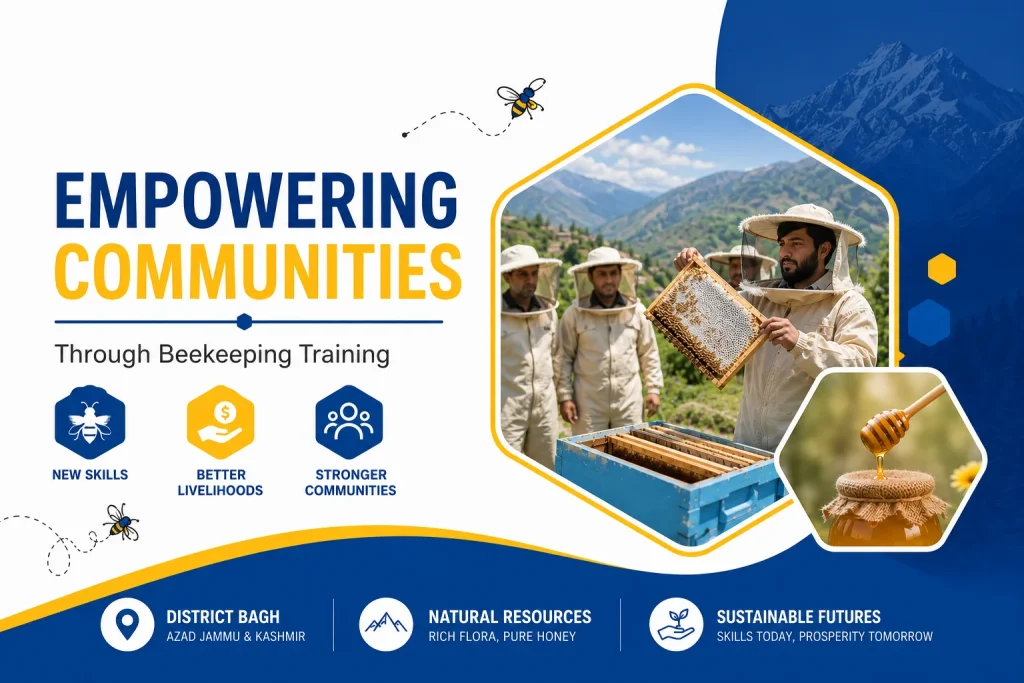
Help In Need has long operated on the belief that lasting change doesn’t come from handouts. It comes from equipping people with skills, knowledge, and confidence. The beekeeping workshop is a textbook example of that philosophy in action.
When a community member learns to keep bees successfully, several things happen at once. They gain an income stream that isn’t dependent on a single employer or harvest. They develop a skill that can be passed to their children. They contribute to local pollination, which benefits agriculture broadly. And perhaps most importantly, they gain a sense of agency and the knowledge that they can build something for themselves.
UKIM’s support reflects a partnership model that HIN has consistently relied on: bringing together organizations with shared values to multiply impact in communities that need it most. The collaboration ensures that workshops like this one don’t remain isolated events, but feed into a larger network of support, follow-up, and resource access.
A Step Toward Sustainable Change
Two days is, of course, just a beginning. The real work starts when participants return to their homes and begin applying what they’ve learned. HIN’s approach acknowledges this. The workshop is a launch pad, not a finish line. Follow-up support, access to starter equipment, and ongoing guidance are all part of building something that lasts.
For the families of District Bagh, this workshop represents something meaningful: proof that organizations are investing in them, in their skills, and in their futures. In a region that has faced its share of hardship, from economic constraints to the lingering effects of past disasters, that investment carries real weight.
The bees are ready. The knowledge is there. And with the right support, the communities of AJK are more than capable of building something sweet out of it.
FAQs
1. What did participants learn at the beekeeping workshop in Bagh, AJK?
Training covered bee biology, colony management, hive setup, seasonal practices, disease control, and honey extraction. Participants also received guidance on treating beekeeping as a small business, including pricing, production records, and where to sell their honey locally.
2. Why is beekeeping a good livelihood option for communities in AJK?
AJK’s diverse flora and mountain climate make it naturally ideal for beekeeping. The investment is low, no large land is needed, and hives can run alongside existing farm work. A well-managed apiary can generate income multiple times a year, giving families in Bagh a reliable and scalable additional income source.
3. Who organized the workshop and what role did UKIM play?
Help In Need organized the workshop. UKIM (UK Islamic Mission), a long-established UK-based humanitarian organization, partnered with HIN to provide resources and technical support. This kind of collaboration allows HIN to deliver higher-quality programming in remote areas that might otherwise go underserved.
4. How does a two-day training create real long-term change?
The workshop builds the foundational knowledge and confidence participants need to actually get started. HIN’s approach doesn’t stop at training. It includes follow-up guidance and where possible, starter support for setting up first hives. Over time, trained beekeepers often become local mentors, spreading skills further across their communities.
5. How can people support Help In Need’s livelihood programs?
Donations can be made at helpinneed.org. HIN is FBR tax-exempt, so Pakistani donors may qualify for tax deductions. Organizations interested in partnerships can reach the team at info@helpinneed.org or +92 51 8732605. Sharing HIN’s work on social media is also a simple and meaningful way to help expand their reach.
This blog was written based on an initiative by Help In Need (HIN) in partnership with UKIM. For more information about their programs, visit helpinneed.org.