
Each year, Pakistan’s monsoon season brings the rain that farmers depend on, and the floods that can wash away everything in their path. This year is no different. Monsoon flood relief in Pakistan has become an immediate priority again, as rising rivers push families out of low-lying villages across Punjab, Sindh and Khyber Pakhtunkhwa.
The damage rarely stops when the rain does. Contaminated water, ruined crops and lost income can weigh on a household for months afterwards. Understanding how relief and recovery actually work helps you see where your support makes the biggest difference, and why a good response has to reach well beyond the first emergency week.
What Is Monsoon Flood Relief in Pakistan?
The monsoon is the season of heavy rain that moves across South Asia between June and September. In Pakistan, this rain feeds the major rivers — the Indus, Chenab and Sutlej — until they overflow and flood farmland, homes and whole communities.
Flood relief covers the aid and support given to people affected by these floods. Broadly, it runs in two stages:
- Relief — the immediate response: clean water, food, shelter and basic medical care in the first days and weeks.
- Recovery — the longer rebuild, from homes and water systems to livelihoods, once the floodwater drains away.
Both stages matter. Emergency aid keeps people alive during the crisis, while recovery gives them a way to stand on their own feet again. A strong response links the two, so families are not simply rescued one year and left exposed the next.
What Do Flood-Affected Families Need Right Now?
When floodwater arrives, families often lose their home, their food stores and their income within hours. The needs that follow are urgent and practical.
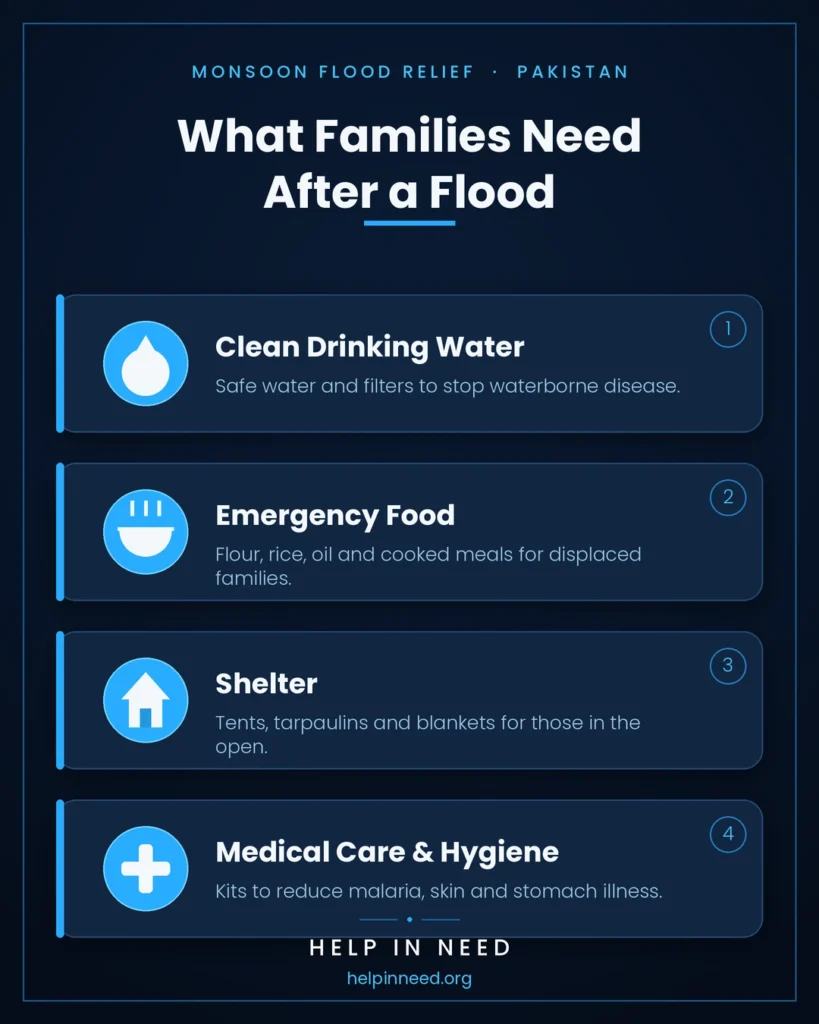
Priorities usually include:
- Clean drinking water — floodwater mixes with sewage, so safe water and filters are the first defence against disease.
- Emergency food — flour, rice, oil and cooked meals for households that have lost their harvest.
- Shelter — tents, tarpaulins and blankets for people sleeping out in the open.
- Medical care and hygiene kits — to reduce the malaria, skin infections and diarrhoeal illness that follow almost every flood.
Waterborne disease, rather than the flood itself, is often the biggest threat to life in the days afterwards. That is why clean water sits at the centre of any serious response. Our flood emergency appeal is built around these frontline essentials, delivered straight to the worst-hit districts.
How Monsoon Flood Relief in Pakistan Works After the Water Recedes
Emergency aid saves lives in the first days, but recovery is what rebuilds them. Once the water drains away, the focus shifts from survival to restoration. At this stage, the work usually turns to:
- Restoring clean water — repairing wells and hand pumps so villages are not left drinking from polluted pools.
- Rebuilding homes — helping families patch up damaged houses before the colder months set in.
- Reviving livelihoods — replacing lost livestock, tools and small shops so parents can earn an income again.
- Protecting health — mobile clinics and hygiene support to head off outbreaks after the flood.
Recovery is slower and far less visible than the emergency headlines. Even so, it is the part that breaks the cycle of poverty. A household with a working water pump and a restored shop rarely needs rescuing all over again the following season.
Why Long-Term Support Matters as Much as Emergency Aid
It is tempting to assume the crisis ends when the water goes down. In practice, that is when many families face their hardest months, savings gone, harvest lost, and the village well unusable.
Effective monsoon flood relief in Pakistan therefore plans for both the emergency and the year that follows. Clean water systems, livelihood grants and simple hygiene training cost far less than repeated rescues, and they hand people control over their own recovery. That is the real difference between short-term charity and lasting change, and it is where steady, well-directed support does the most good.
How Help in Need Supports Flood-Affected Communities
Help in Need is a Pakistan-based humanitarian organisation working directly in the communities hit hardest by flooding. Because the team is already on the ground, aid reaches families quickly, from clean water and food parcels in the emergency phase to WASH facilities and livelihood support during recovery.
Much of this work is delivered alongside trusted donor partners, which keeps every contribution tracked and accountable. When you give through our clean water and WASH programme, you help restore something a flood takes first: safe water, and the dignity that comes with it.
FAQs
How can I help flood victims in Pakistan?
The most effective way is to support a humanitarian organisation already working on the ground, such as Help in Need. Your gift can fund clean water, food, shelter and medical care. Giving online takes only a few minutes, and a trusted charity makes sure it reaches real families fast.
What do flood-affected families need most after a flood?
Clean water usually comes first, because floodwater carries disease. Food, shelter and medical care follow closely behind. During recovery, families also need help rebuilding homes and restoring the livelihoods — small shops, tools and livestock — that the flood swept away.
How does monsoon flood relief in Pakistan prevent disease?
Good relief work treats clean water and sanitation as the top priority. Safe drinking water, filters, hygiene kits and repaired pumps slow the spread of malaria, diarrhoeal illness and skin infections. These are the conditions that cause most deaths once the water itself has gone.
When is Pakistan’s monsoon flood season?
Pakistan’s monsoon runs from roughly late June to September each year. Heavy rain in these months can push rivers over their banks and trigger flash floods, especially across Punjab, Sindh and Khyber Pakhtunkhwa. Recent seasons have brought some of the most severe flooding in decades.
Where does my donation go?
With Help in Need, donations fund direct relief and recovery, clean water, food, shelter, and longer-term WASH and livelihood support. Working through local teams and donor partners keeps the whole response fast, practical and accountable to the people it serves.
Be Part of the Recovery
The floods will return, but so can the response. By backing monsoon flood relief in Pakistan today, you help a family reach clean water, a warm meal and a way to rebuild what they have lost. Help in Need turns your support into practical help on the ground, exactly when it matters most. Support flood relief today at helpinneed.org and be part of the recovery.