
World Environment Day is observed every year on June 5. This year, the world came together once again to talk about the planet we share, the damage being done to it, and what we can all do about it.
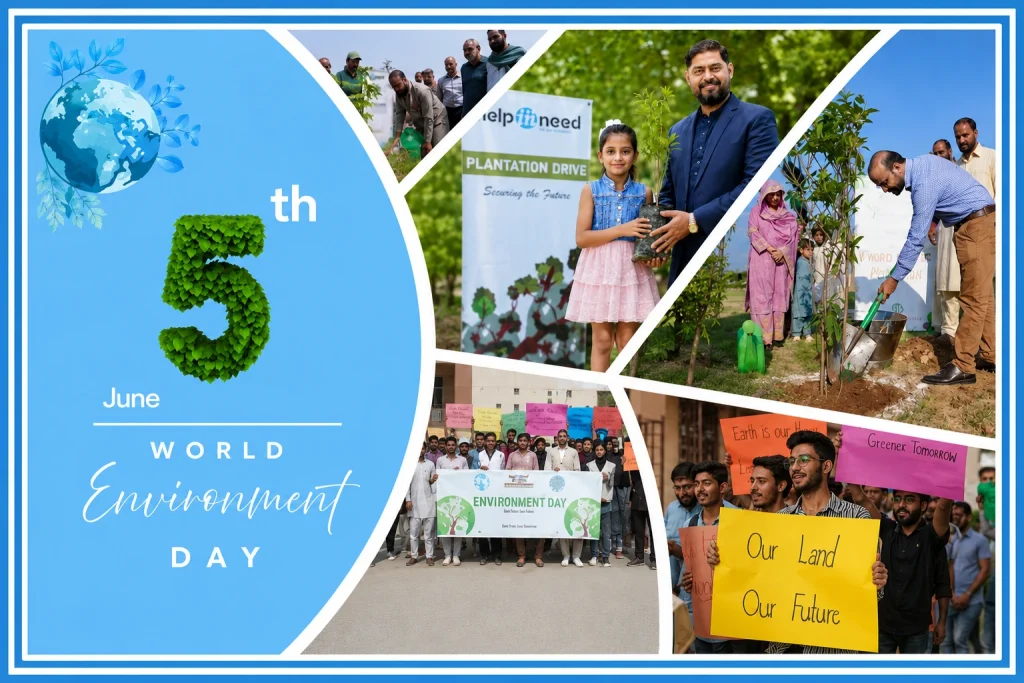
This year, the United Nations chose Baku, Azerbaijan as the host city. The theme is “Now For Climate” a direct call to stop waiting and start acting. The message from UNEP is simple: the Earth is already sending us urgent signals. The question is what signals we choose to send back.
At Help In Need, we do not just mark this day with words. We have been doing the work on the ground for years.
Why This Day Matters for Pakistan
Pakistan is one of the countries that feels climate change most directly, despite contributing less than one percent of the world’s greenhouse gas emissions. That gap between contribution and consequence is deeply unfair, and it affects the very communities HIN works with every single day.
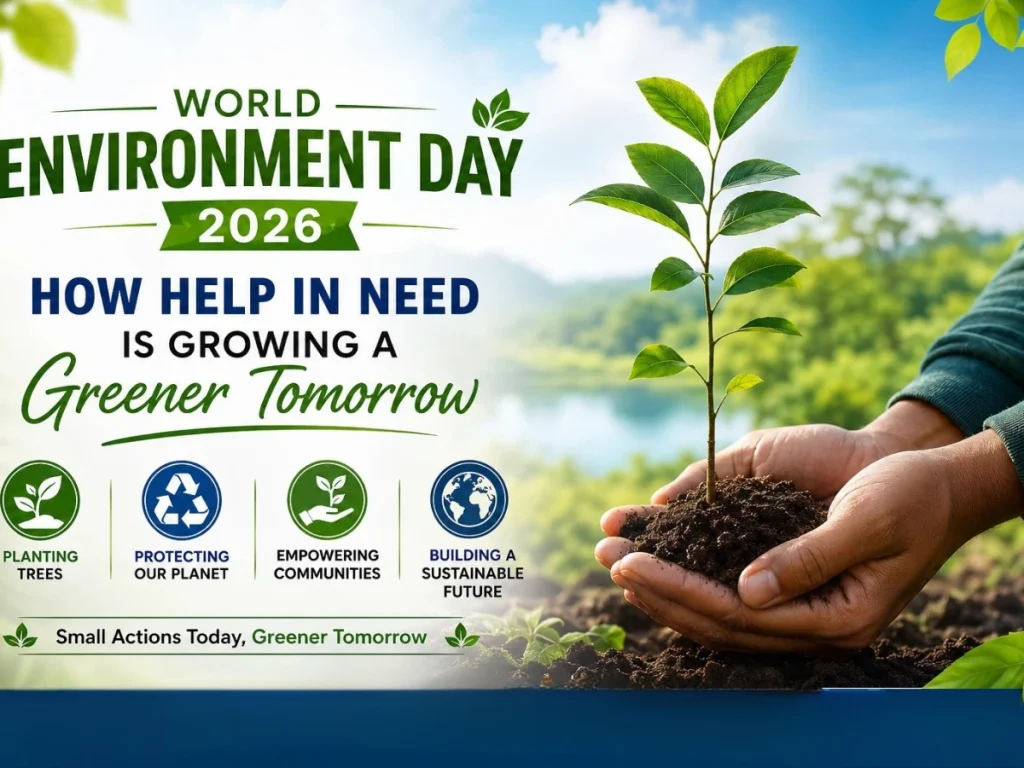
Cities like Lahore and Faisalabad are on course to become some of the hottest cities in the world by 2050. Temperatures in Islamabad have already hit record highs. Urban areas across Pakistan are losing green cover at a time when they need it most. The urban heat island effect, where concrete and buildings trap heat and push temperatures several degrees higher than surrounding areas, is making life genuinely harder for people in low income neighbourhoods.
The communities that suffer most from these rising temperatures are the same communities that have the fewest resources to cope. They cannot afford air conditioning. They cannot move somewhere cooler. They rely on the natural environment to keep their homes liveable, their water sources clean, and their food supply stable.
This is why environmental work is not separate from humanitarian work. For HIN, it is the same work.
Our Building Resilience and Humanitarian Response programme exists precisely because climate change and community vulnerability are linked. Floods destroy homes. Droughts destroy livelihoods. Heat kills. The families we support through our Poverty Alleviation and Human Development programme and our WASH and Primary Health Care work are on the front line of all of it.
HIN’s Urban Forestation Project
Over the past few years, Help In Need has planted thousands of trees in urban areas across Pakistan through its Urban Forestation Project.
This is not a token gesture. Trees in cities do measurable work. They absorb carbon dioxide from the air. They cool the streets around them through a process called evapotranspiration, where water released through leaves lowers the surrounding temperature. They provide shade. They improve air quality. They reduce flooding by absorbing rainwater. And they give communities something green to look at, which matters for mental health too.
In Pakistan’s rapidly growing cities, where green space is being swallowed by concrete every year, planting trees in urban areas is both an environmental act and a community service.
Each tree HIN plants is a small but real contribution to the bigger goal of making Pakistan’s cities liveable for the generations growing up in them right now.
Youth at the Centre of Climate Action
Alongside tree plantation, Help In Need has been working to empower young people through climate awareness and environmental conservation training.
This matters because young people in Pakistan are going to live with the consequences of today’s environmental choices for decades. They deserve to understand what is happening to their planet and to have the skills and confidence to respond to it.
HIN has engaged thousands of young people across its programme areas in sessions on climate risk, disaster preparedness, and environmental conservation. Young people have been trained on how communities can reduce their vulnerability to flooding, heat, and other climate-related hazards. School children have learned why trees matter, what deforestation does to water cycles, and how everyday choices add up.
This work connects directly to our broader youth and education focus. In our education support work, we have already reached over 90,000 children across schools in Pakistan. Environmental literacy is increasingly part of that picture.
The youth we train today are not just learning about climate change. They are the ones who will lead the response to it.
Trees, Floods, and Resilience
There is a direct connection between deforestation and the scale of flooding Pakistan faces every monsoon season.
When forests and tree cover are removed, rainwater has nothing to slow it down. It runs off quickly, overwhelming rivers and flooding communities downstream. When tree cover exists, water is absorbed into the soil gradually. Roots hold the earth in place. The damage from storms is reduced.
This is why HIN’s tree plantation work is not just about the environment in the abstract. It is about protecting the same communities we serve through our disaster response and resilience work. Communities that have trees are less likely to be washed away when the rains come.
With monsoon season approaching in Pakistan in the coming weeks, the timing of World Environment Day 2026 is particularly relevant. Every tree planted before the rains is a small act of flood prevention.
Every Tree Is a Step Forward
The theme of World Environment Day 2026 is “Now For Climate.” That word “now” is important.
Climate action that is planned for later, or promised for a future date, does not help the family in a flood-prone district whose home is at risk this July. It does not help the child in a concrete neighbourhood who is growing up without shade or clean air. It does not help the communities that HIN serves across Pakistan, who are already living with the consequences of climate change that they did nothing to create.
HIN’s approach has always been to act now, with what we have, where we are.
Thousands of trees planted. Youth trained. Communities made more resilient. This is what World Environment Day looks like when it moves from a date on a calendar to work on the ground.
Every tree planted is a step toward a healthier planet. Together, let us grow a greener future.
How You Can Support This Work
If you want to support HIN’s environmental, resilience, and community programmes, visit our Ways to Donate page or get in touch with our team directly.
📞 +92 51 8732605 📧 info@helpinneed.org 🌐 helpinneed.org
Follow HIN on Facebook and Instagram to follow our work on the ground.
Related reading: