The story of Qurbani is not just a ritual it is a powerful reminder of faith, sacrifice, and unwavering devotion that continues to inspire millions every year. As Eid al-Adha approaches, many Muslims seek to understand the deeper meaning behind this sacred act and how it connects to their daily lives. Why do we sacrifice an animal, and what lessons can we learn from it today? The answer lies in a profound story of obedience, trust, and submission to Allah. In this guide, we’ll explore the origin of Qurbani, the virtues of Dhul Hijjah, and how you can make your Qurbani donation truly impactful.
The Story of Prophet Ibrahim (AS) and the Origin of Qurbani
The foundation of Qurbani traces back to the remarkable story of Prophet Ibrahim (AS) and his son Ismail (AS). In a dream, Ibrahim (AS) saw himself sacrificing his beloved son, which he recognized as a command from Allah. Without hesitation, he shared this vision with Ismail (AS), who responded with patience and willingness to obey Allah’s will. This moment reflects one of the greatest examples of faith and submission in Islamic history. It highlights the essence of Qurbani putting Allah above everything else, even what we love most.
As the story continues, Ibrahim (AS) took his son to fulfill the command, demonstrating complete trust in Allah’s wisdom. Just as he was about to carry out the sacrifice, Allah intervened and replaced Ismail (AS) with a ram. This divine act showed that Allah values intention and sincerity over the act itself. Today, Muslims around the world commemorate this event by performing Qurbani during Eid al-Adha. The ritual serves as a reminder that true faith requires sacrifice, patience, and unwavering belief.
Why the First 10 Days of Dhul Hijjah Are So Special
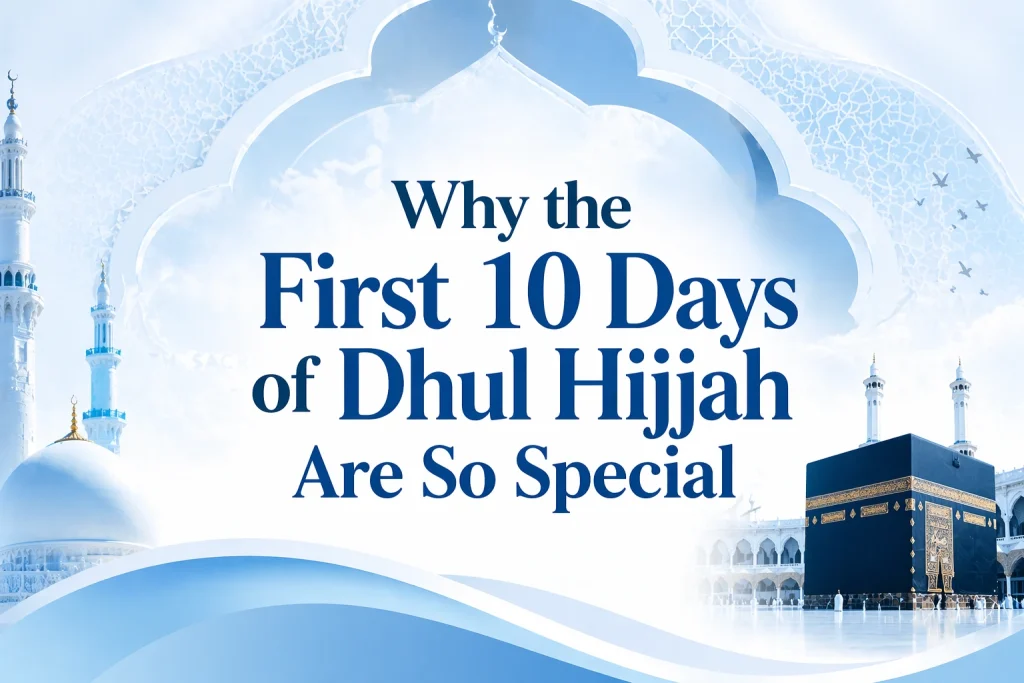
The first ten days of Dhul Hijjah are considered the most sacred days in the Islamic calendar. During this time, Muslims are encouraged to increase their عبادات (acts of worship) and strengthen their connection with Allah. The Prophet Muhammad (PBUH) emphasized that good deeds performed during these days are more beloved than at any other time of the year. This makes it an ideal period for spiritual growth, repentance, and generosity. It is also the time when millions of Muslims perform Hajj, one of the five pillars of Islam.
These blessed days bring together all major forms of worship, making them unique and spiritually powerful. Muslims engage in fasting, prayer, charity, and remembrance of Allah more intensely during this period. The Day of Arafah, which falls on the 9th of Dhul Hijjah, holds immense significance as a day of forgiveness and mercy. Fasting on this day is highly recommended for those not performing Hajj, as it expiates sins of the past and coming year. Overall, these ten days provide a golden opportunity to maximize rewards and renew faith.
The Spiritual Lessons Behind Qurbani
Qurbani is not merely about sacrificing an animal; it is about sacrificing our ego, desires, and attachment to worldly things. It teaches Muslims the importance of obedience, humility, and devotion to Allah. By remembering the story of Ibrahim (AS), believers are reminded that true ایمان (faith) requires action and sacrifice. This act also fosters empathy by encouraging the sharing of meat with those less fortunate. In essence, Qurbani strengthens both spiritual and social bonds within the community.
Here are some key lessons we learn from Qurbani:
- Submission to Allah: Trusting divine wisdom even when it is difficult
- Generosity: Sharing blessings with the poor and needy
- Gratitude: Appreciating what we have been given
- Community Support: Helping build a caring and compassionate society
These lessons make Qurbani more than a ritual—it becomes a life-changing experience.
How to Make Your Qurbani More Impactful
Performing Qurbani through a trusted charity can significantly increase its impact, especially in underprivileged communities. Many families in Pakistan rely on Qurbani meat as one of their few opportunities to enjoy nutritious food. By choosing a reliable organization, you ensure your sacrifice reaches those who truly need it. This approach combines spiritual fulfillment with humanitarian impact. It also allows donors to participate in global الخير (charity) efforts with ease.
Here’s how you can maximize your Qurbani donation:
| Step | Action |
| 1 | Choose a trusted charity organization |
| 2 | Select your Qurbani package |
| 3 | Make your donation online |
| 4 | Ensure proper distribution to needy families |
| 5 | Share the reward and blessings |
Making an informed Qurbani donation ensures transparency, efficiency, and maximum benefit for recipients.
FAQs
1. What is Qurbani in Islam?
Qurbani is the ritual sacrifice of an animal during Eid al-Adha to honor the devotion of Prophet Ibrahim (AS).
2. Who is required to perform Qurbani?
Every financially capable Muslim adult who meets the nisab threshold is obligated to perform Qurbani.
3. When should Qurbani be performed?
It is performed after the Eid prayer on the 10th of Dhul Hijjah and can continue until the 12th.
4. Can I give Qurbani donation online?
Yes, many trusted charities offer online Qurbani services, ensuring proper sacrifice and distribution.
5. What is the significance of the Day of Arafah?
It is one of the holiest days, offering immense rewards for fasting, دعا (supplication), and repentance.
Make Your Qurbani Count – Donate with Purpose
This Dhul Hijjah, turn your sacrifice into hope for families in need. With Help In Need (HIN), your Qurbani donation helps provide food, dignity, and relief to vulnerable communities across Pakistan. Your contribution can bring smiles to those who need it most.
Donate now and be part of something meaningful. Together, we can transform lives—one Qurbani at a time.